

WHY IT'S DIFFERENT AFTER YOU RETIRE
Saving and spending are different jobs.
While you were saving, the order of good and bad years didn't change where you ended up. Once withdrawals begin, it does. Money leaves while values are down, and those dollars don't get the recovery.
That is timing risk, and it is one of three risks the guide walks through, along with inflation and living longer than planned.
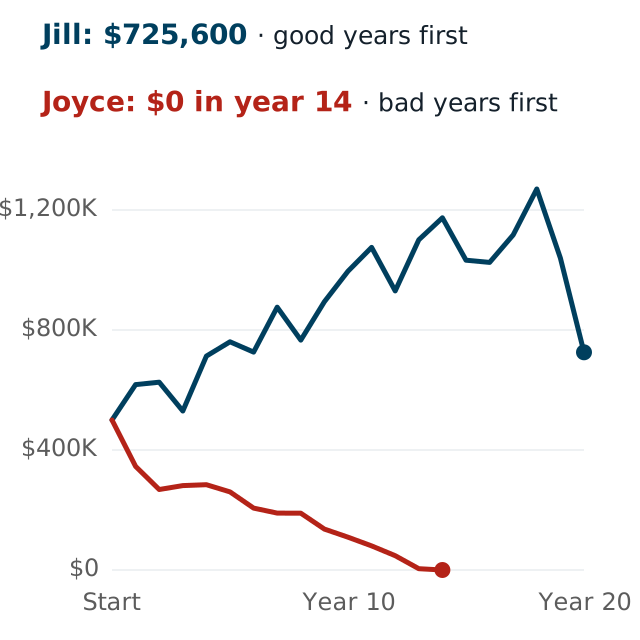
See the year-by-year numbers
| Year | Jill's return | Jill's value | Joyce's return | Joyce's value |
|---|---|---|---|---|
| 1 | +31.5% | $618K | -26.5% | $345K |
| 2 | +6.6% | $626K | -14.7% | $268K |
| 3 | -10.8% | $530K | +19.0% | $281K |
| 4 | +43.4% | $713K | +14.3% | $284K |
| 5 | +12.0% | $761K | +4.0% | $260K |
| 6 | +0.05% | $726K | -8.5% | $206K |
| 7 | +26.9% | $876K | +11.1% | $190K |
| 8 | -8.7% | $766K | +24.0% | $189K |
| 9 | +22.8% | $894K | -10.0% | $136K |
| 10 | +16.5% | $996K | +12.5% | $109K |
| 11 | +12.5% | $1.08M | +16.5% | $80K |
| 12 | -10.0% | $930K | +22.8% | $48K |
| 13 | +24.0% | $1.10M | -8.7% | $4K |
| 14 | +11.1% | $1.17M | +26.9% | $0 |
| 15 | -8.5% | $1.03M | +0.05% | $0 |
| 16 | +4.0% | $1.03M | +12.0% | $0 |
| 17 | +14.3% | $1.12M | +43.4% | $0 |
| 18 | +19.0% | $1.27M | -10.8% | $0 |
| 19 | -14.7% | $1.04M | +6.6% | $0 |
| 20 | -26.5% | $726K | +31.5% | $0 |
Annual returns are those of the S&P 500 index, an unmanaged index that cannot be invested in directly, with dividends reinvested and no taxes or fees. Past index performance does not guarantee or indicate future results. Data source: Standard & Poor's. The guide has the full tables, including withdrawals.
PUTTING IT TOGETHER
One plan, three risks.
Each part of your savings is arranged by when it will be needed, and each part is aimed at a different risk. The money you'll spend first is positioned most conservatively. The money you won't need for decades is positioned for growth.
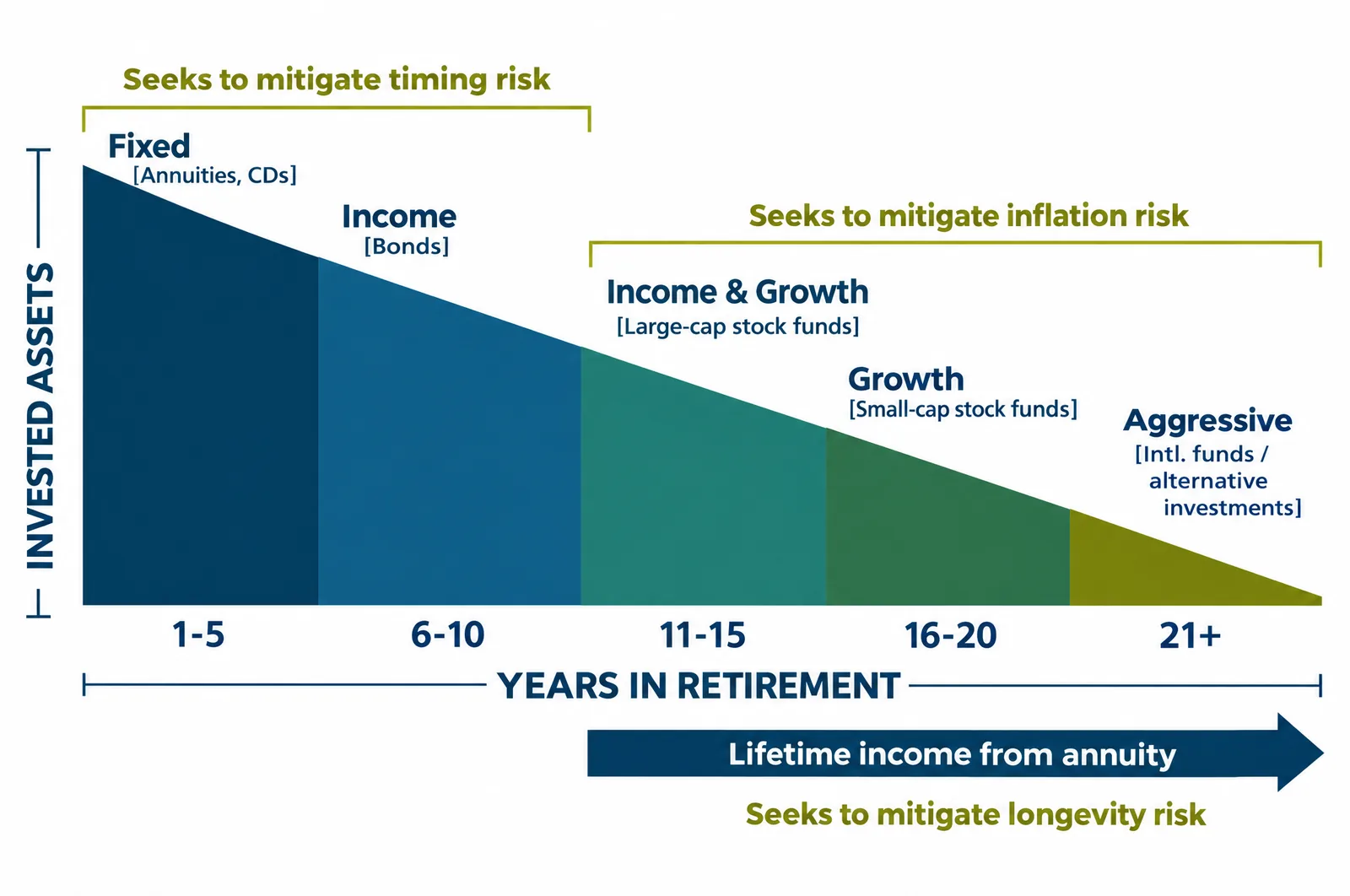
Timing risk
The first ten years of income come from the more conservative bands, so early withdrawals are less dependent on a market downturn.
Inflation risk
Money for year 11 and beyond stays invested longer, with time to grow and fund rising income.
Longevity risk
An optional annuity can add lifetime income designed to help cover essential bills, however long retirement lasts.
WHAT'S INSIDE
A plan you can read in one sitting.
The three big risks
Timing, inflation and longevity, and why all three sit outside your control.
How the six segments work together
What each segment is for, and why changes happen at five-year boundaries, by design.
Income that steps up
Why the plan is designed to raise monthly income about 16% every five years, which is what 3% inflation compounds to.
What a written plan includes
The five parts of a NextPhase plan, the four factors that shape it, and a page of questions to bring to a first conversation.
WHO IT'S FOR
Written for savings that need to do just enough.
Close to the paycheck ending
You're within about ten years of retirement, or recently retired, and the next decisions feel bigger than the last ones.
Thinking in monthly income
The question on your mind is less "how much have I saved?" and more "what can I spend each month, for how long?"
Wanting it in writing
You'd like a plan you can read, question and share with your spouse, CPA or attorney before you act on it.
WHO'S BEHIND IT
Lifetime Retirement Partners
We're an independent retirement planning firm with offices in Omaha, Nebraska; Windsor, Colorado; and Sioux City, Iowa. NextPhase is the time-segmented income process we use to turn savings into a written monthly income plan.
The guide explains the method. It isn't a recommendation for your situation, which is what a written plan is for.
THE NEXT STEP
Your plan, in writing.
After a first conversation, your NextPhase plan arrives as a written Income Plan Analysis: a report you can read, question and share with your spouse, CPA or attorney. These are real pages from a sample plan for a fictional household.
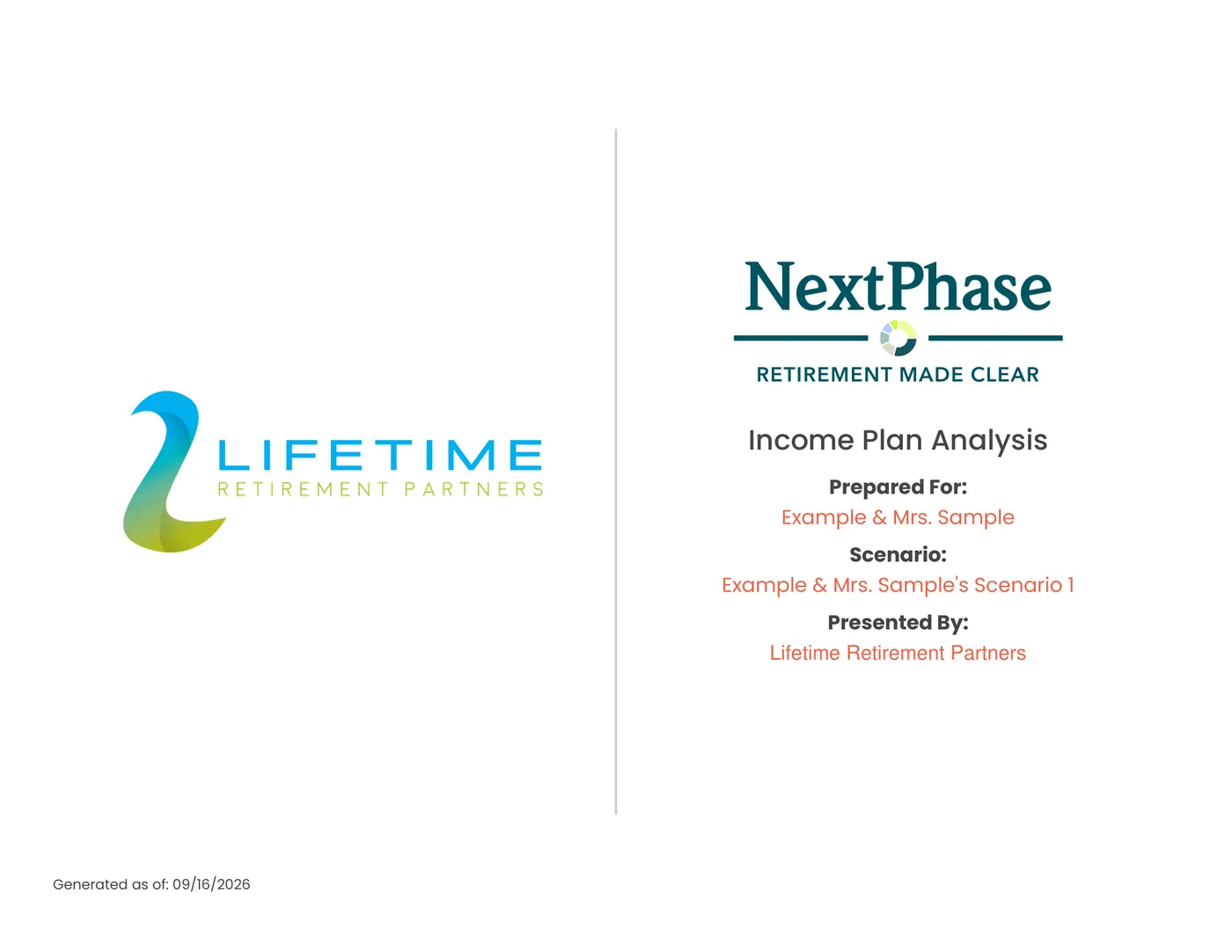
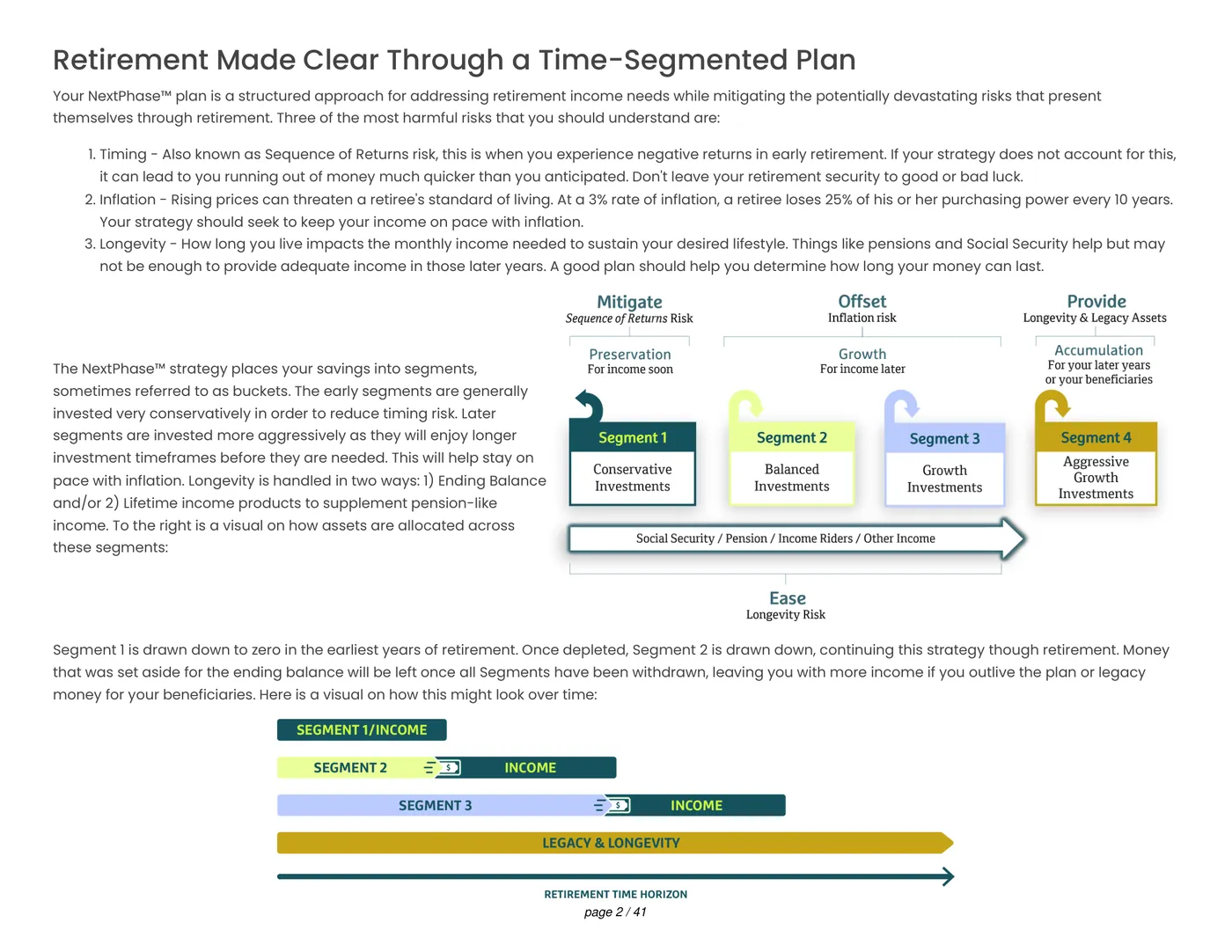
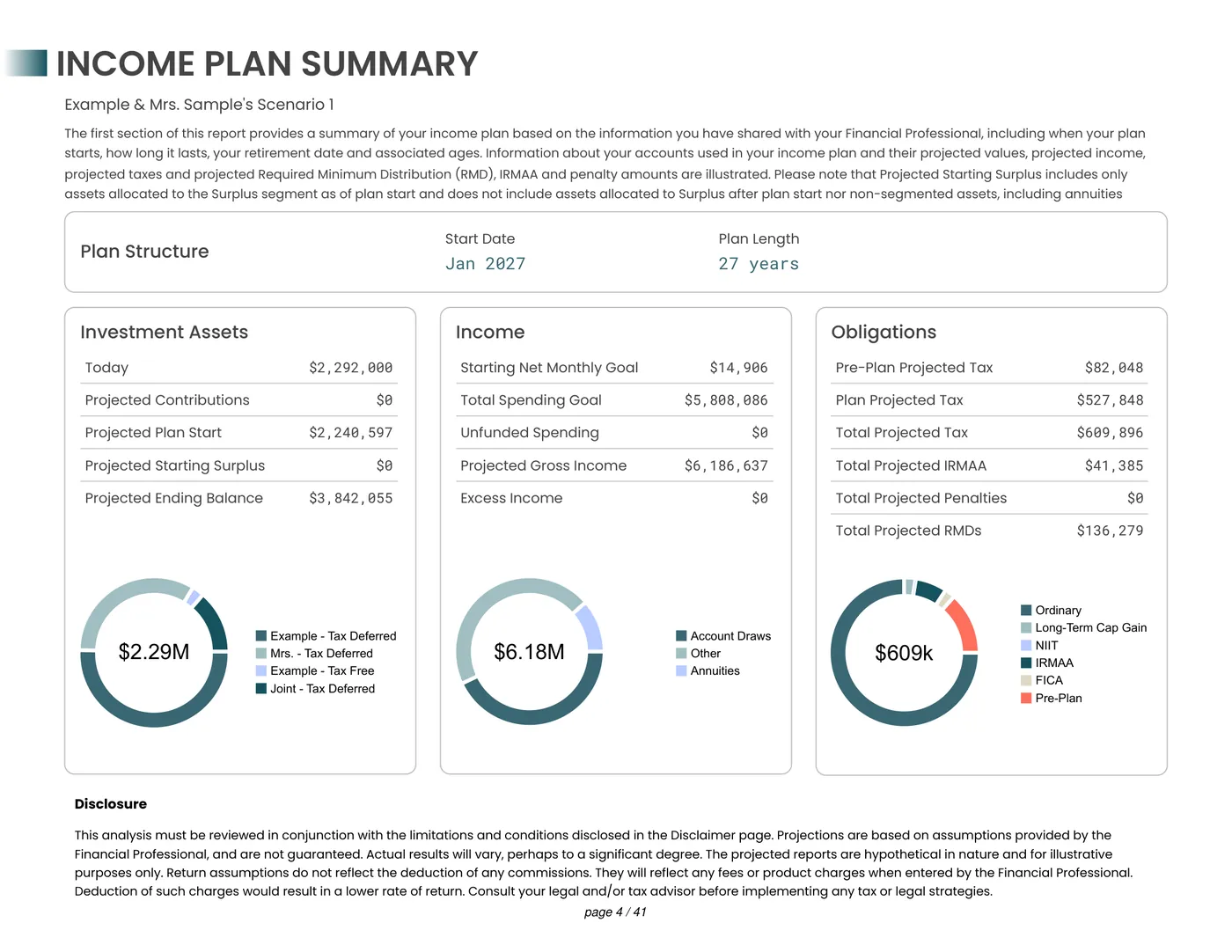
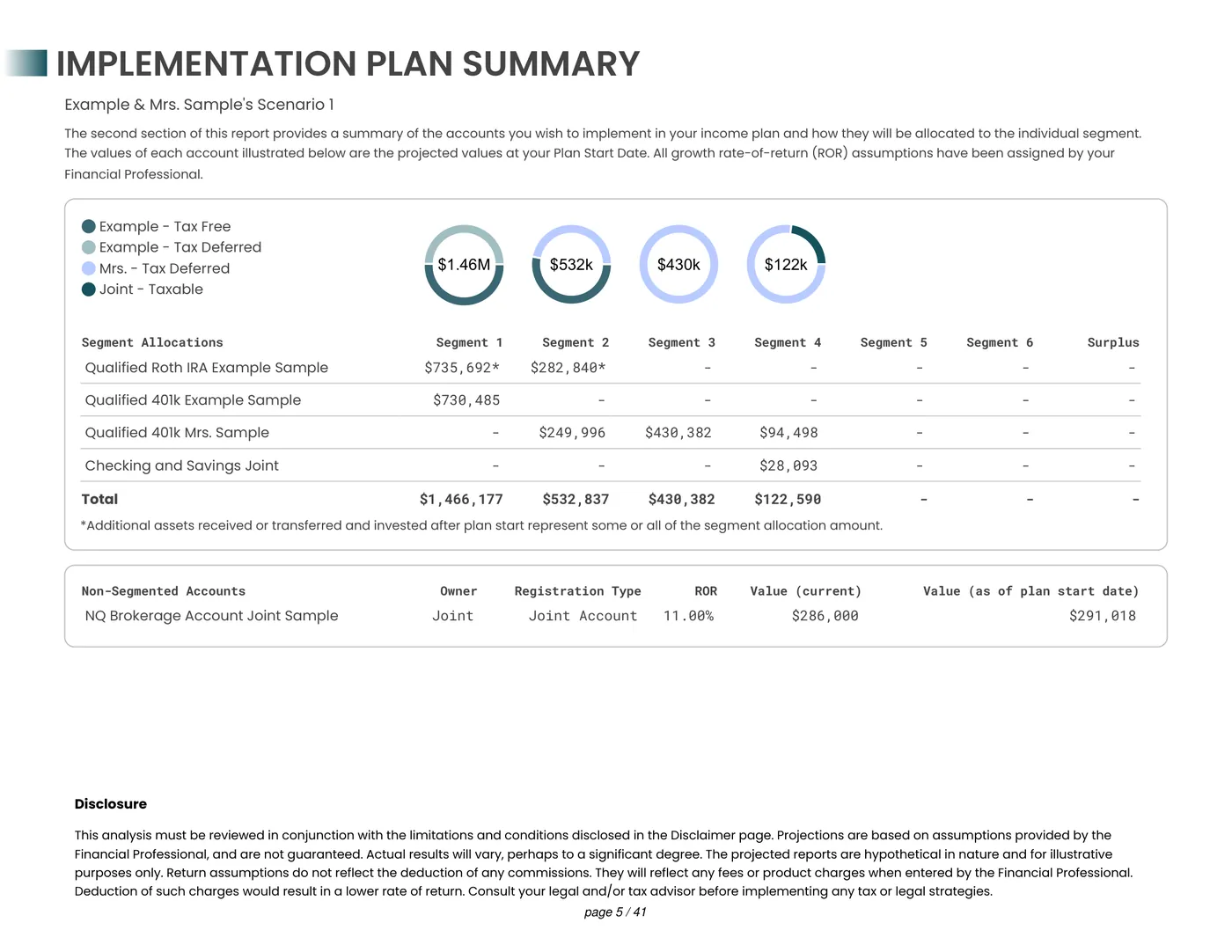
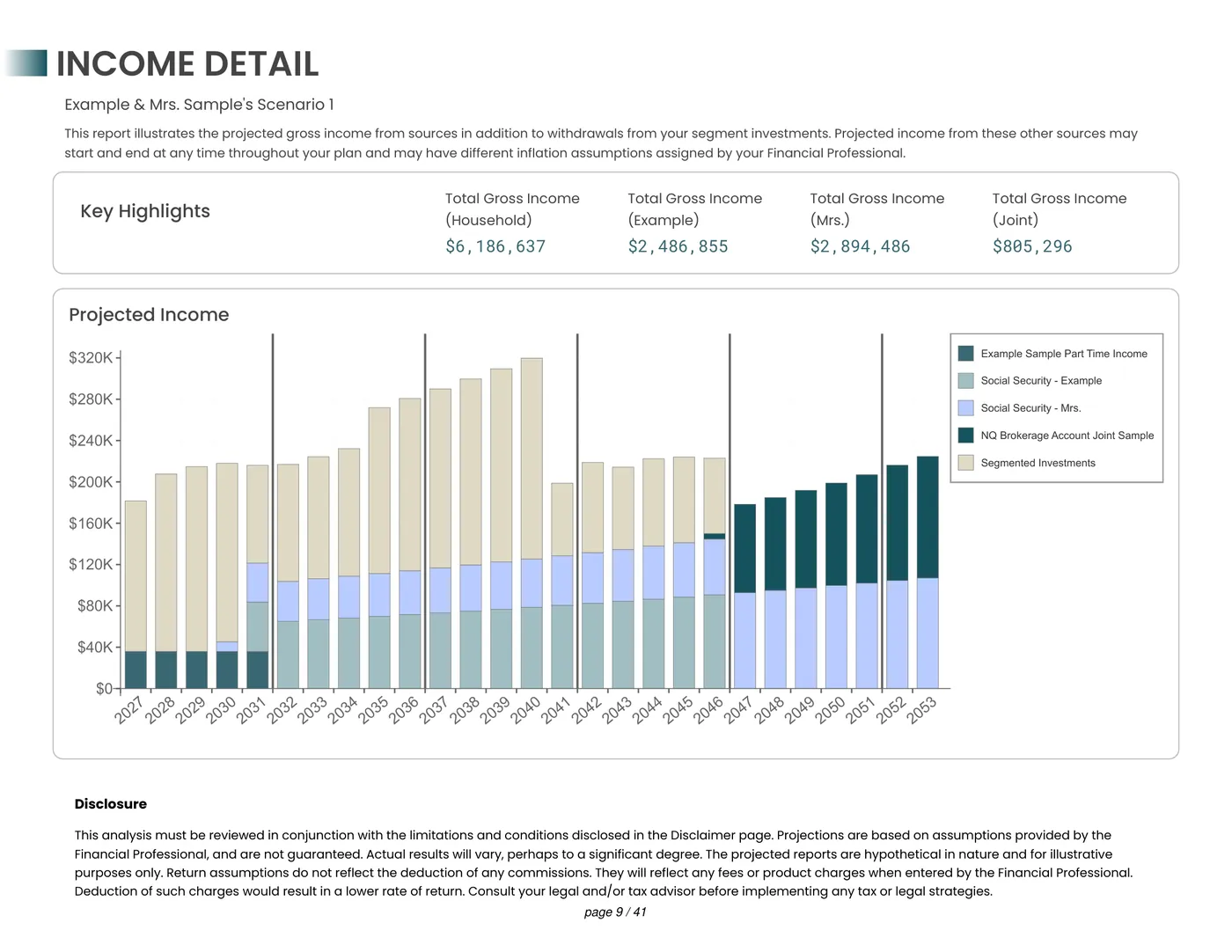
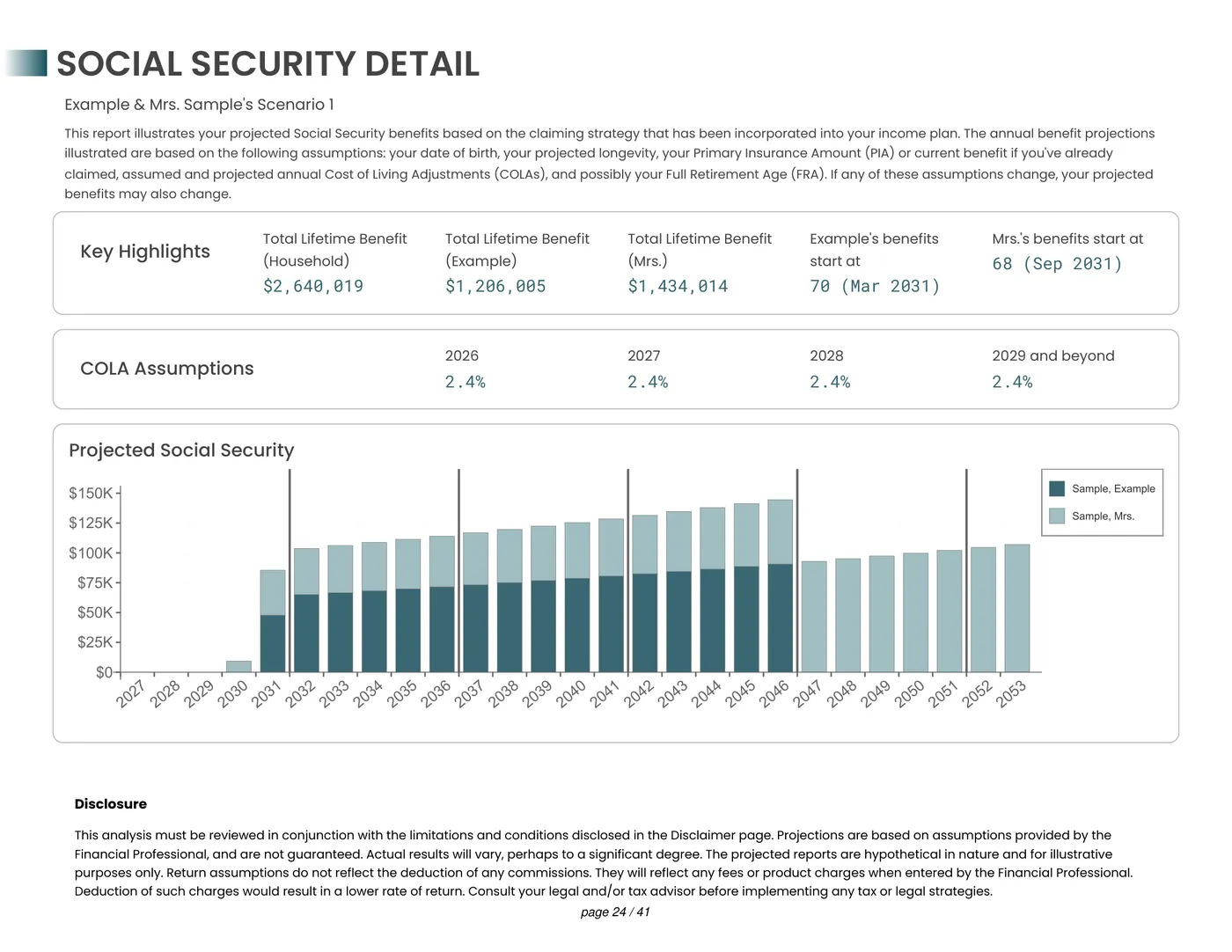
Sample pages from a hypothetical plan for a fictional household. Your report reflects your own information and assumptions. Projections are hypothetical, are not guaranteed, and actual results will vary.
See how your savings could be organized for income.
Start with the guide. When you're ready, a written plan shows your own numbers.
Get the free guide Prefer to talk? Call 800.971.2989.